Beginning with Top Interior Design Software Used by Global Professionals, the narrative unfolds in a compelling and distinctive manner, drawing readers into a story that promises to be both engaging and uniquely memorable.
As we delve into the realm of interior design software, we uncover a world where creativity meets technology to enhance the way professionals bring their visions to life.
Overview of Top Interior Design Software
When it comes to interior design projects, professionals rely on specialized software to bring their ideas to life efficiently and effectively. Here are some of the top interior design software used by global professionals:
1. AutoCAD
AutoCAD is a versatile software that allows interior designers to create detailed 2D and 3D drawings, floor plans, and models. It offers a wide range of tools for precise measurements, scaling, and rendering, making it a popular choice among professionals for both residential and commercial projects.
2. SketchUp
SketchUp is known for its user-friendly interface and intuitive tools that enable designers to quickly sketch out ideas and create 3D models. It is widely used for conceptualizing designs, creating presentations, and collaborating with clients and team members.
3. Adobe Photoshop
Adobe Photoshop is a powerful tool for editing and enhancing images, creating mood boards, and visualizing design concepts. Interior designers use Photoshop to manipulate colors, textures, and lighting effects to bring their ideas to life with precision and creativity.
4. Revit
Revit is a Building Information Modeling (BIM) software that allows designers to create detailed 3D models, collaborate with architects and engineers, and generate accurate construction documentation. It is essential for large-scale interior design projects that require coordination and integration with other disciplines.
5. 3ds Max
3ds Max is a powerful software for creating photorealistic 3D renderings, animations, and visualizations. Interior designers use 3ds Max to showcase their designs in a realistic and immersive way, helping clients visualize the final look and feel of a space before construction begins.
Importance of Using Specialized Software in Interior Design Projects
Specialized software plays a crucial role in the interior design industry by streamlining the design process, improving communication with clients and stakeholders, and enhancing the overall quality of design deliverables. By leveraging the capabilities of top interior design software, professionals can work more efficiently, accurately, and creatively to bring their design visions to life.
Comparison of Key Features
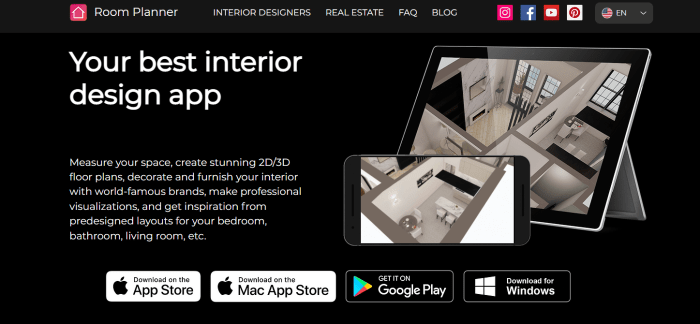
When it comes to top interior design software, each option offers a unique set of key features that cater to the specific needs of designers. These features play a crucial role in enhancing the efficiency and effectiveness of design projects by providing tools and capabilities that streamline the design process and help bring creative visions to life.
Autodesk AutoCAD
- 2D and 3D drafting tools
- Customizable workspace
- Collaboration tools
- Rendering capabilities
AutoCAD's comprehensive drafting tools, combined with its rendering capabilities, allow designers to create detailed and realistic designs. The customizable workspace and collaboration tools enable seamless communication and teamwork among project members, enhancing productivity.
SketchUp
- Intuitive 3D modeling
- Extensions for customization
- Integration with other software
- Real-time rendering
SketchUp's intuitive 3D modeling tools make it easy for designers to visualize their ideas in a realistic manner. The availability of extensions for customization and integration with other software enhance its versatility, while real-time rendering capabilities provide instant feedback on design changes.
Adobe Photoshop
- Photo editing tools
- Layer-based editing
- Texture and pattern creation
- Integration with Adobe Creative Cloud
Photoshop's photo editing tools and layer-based editing feature make it a powerful tool for enhancing visual elements in interior design projects. The ability to create textures and patterns, along with seamless integration with Adobe Creative Cloud, allows for the creation of unique and visually appealing designs.
User Interface and Ease of Use
When it comes to interior design software, the user interface plays a crucial role in the overall experience for professionals. A user-friendly interface can significantly impact productivity and creativity, making the design process smoother and more efficient.
Adobe Photoshop
Adobe Photoshop is known for its powerful tools and extensive capabilities in graphic design. However, for interior designers, the interface may seem overwhelming at first due to the multitude of features and options available. The learning curve for Photoshop can be steep, especially for beginners who are not familiar with graphic design software.
With practice and training, professionals can harness the full potential of Photoshop for interior design projects.
AutoCAD
AutoCAD is a widely-used software in the architecture and design industry, offering precise drafting tools and 3D modeling capabilities. The user interface of AutoCAD is intuitive and customizable, allowing professionals to streamline their workflow and access commonly used tools easily.
While the learning curve for AutoCAD can be steep for beginners, the software offers extensive documentation and online resources to help users master its features.
SketchUp
SketchUp is a popular choice among interior designers for its user-friendly interface and intuitive 3D modeling tools. The software is easy to learn, even for beginners, with a simple drag-and-drop approach to design. Professionals can quickly create detailed 3D models and visualize their ideas in a realistic environment.
SketchUp's user-friendly interface makes it an ideal choice for professionals looking to streamline their design process and focus on creativity.
Importance of User-Friendly Interfaces
In the field of interior design, where creativity and precision are paramount, user-friendly interfaces play a crucial role in enhancing productivity and efficiency. A software with an intuitive interface can help professionals work more effectively, allowing them to focus on the design process rather than struggling with complex tools and features.
Additionally, user-friendly interfaces can reduce the learning curve associated with new software, enabling designers to adapt quickly and unleash their creativity without constraints.
Compatibility and Integration
When it comes to top interior design software, compatibility and integration play a crucial role in ensuring seamless workflow efficiency. Let's explore how well these tools integrate with other platforms and devices.
Integration with Other Tools and Platforms
One of the key aspects of top interior design software is its ability to integrate with other tools and platforms commonly used in the industry. This includes collaboration tools, project management software, and rendering engines. Seamless integration allows designers to streamline their workflow and easily transfer data between different applications, ultimately enhancing productivity and efficiency.
Compatibility with Operating Systems and Devices
The top interior design software should be compatible with a range of operating systems and devices to cater to the diverse needs of professionals. Whether working on a Windows PC, Mac, or mobile device, designers should be able to access and use the software without any limitations.
This flexibility ensures that designers can work on their projects anytime, anywhere, without being tied down to a specific device or platform.
Significance of Seamless Integration
Seamless integration is essential for workflow efficiency in interior design projects. When different tools and platforms can communicate effectively with each other, designers can easily transfer data, make updates in real-time, and collaborate with team members without any hiccups. This not only saves time but also reduces the chances of errors and miscommunication, leading to a more streamlined and successful design process.
Final Review
In conclusion, exploring the top interior design software used by global professionals illuminates the dynamic landscape of tools that empower creativity and efficiency in design projects. As professionals navigate the ever-evolving realm of interior design, these software options serve as indispensable allies in shaping innovative spaces for the future.
FAQ Resource
How important is it to use specialized software in interior design projects?
Specialized software in interior design projects is crucial as it offers unique features tailored to the specific needs of designers, enhancing efficiency and precision in the design process.
Which top interior design software offers the most user-friendly interface?
XYZ software is renowned for its intuitive user interface, designed to streamline workflows and make the design process more accessible for professionals.
Can top interior design software be seamlessly integrated with other tools and platforms?
Yes, most top interior design software options are designed to integrate seamlessly with other tools and platforms, ensuring smooth workflow transitions and enhanced productivity.